
Introduction
Many people need dental crowns to fix damaged teeth. However, new options like biomimetic dentistry crowns are changing how dentists restore teeth. These crowns use advanced tooth preservation techniques. As a result, they help keep more of your natural tooth. This matters because saving your real tooth is better for your long-term dental health. In this blog, you will learn why biomimetic dental crowns are the future of dental care.
What Are Dental Crowns?
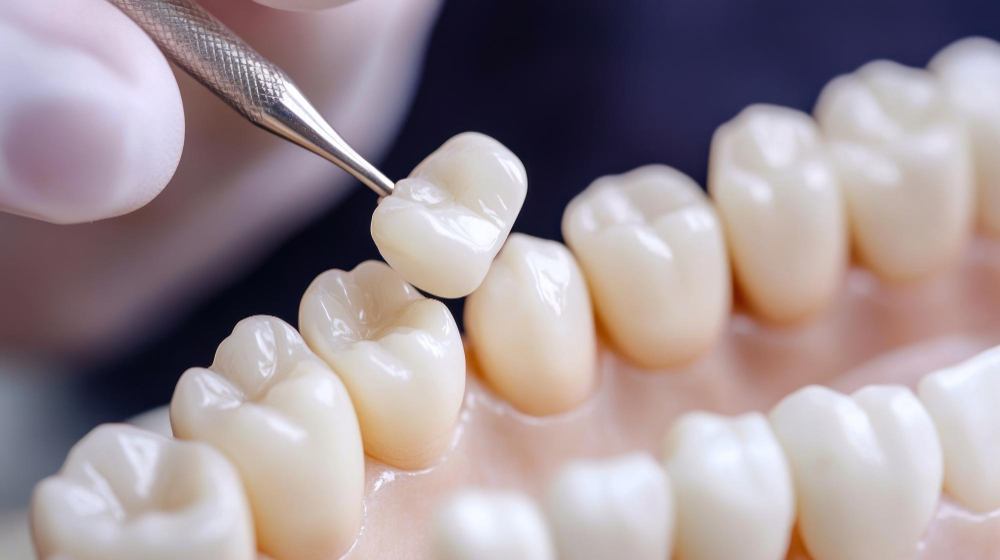
Dental crowns are covers placed over damaged or weak teeth. Usually, dentists use them to restore shape, size, and strength. Sometimes, crowns also improve how a tooth looks. For example, you might need a crown after a large cavity or a root canal. Crowns can be made from metal, porcelain, or ceramic. In many cases, they help protect teeth from breaking.
Traditional “Aggressive” Tooth Capping: Overview and Drawbacks
Traditional crowns often require removing a lot of healthy tooth. Dentists call this process “aggressive” tooth capping. Although it helps the crown fit, it can weaken the tooth. Over time, this may lead to problems like:
Because of these drawbacks, many dentists now look for safer, less invasive options.
What Is Biomimetic Dentistry?
Biomimetic dentistry is a modern approach to dental care. The word “biomimetic” means copying nature. In dentistry, it means using methods and materials that act like real teeth. For instance, biomimetic dental crowns are designed to move and flex like natural teeth. This approach uses minimally invasive dentistry. As a result, dentists remove less healthy tooth tissue.
How Biomimetic Crowns Differ from Traditional Crowns
Biomimetic crowns are different from traditional crowns in several ways. First, they focus on tooth preservation techniques. Dentists only remove the damaged part of the tooth. Next, they use special bonding materials that mimic tooth structure. Because of this, the crown fits better and feels more natural. In addition, biomimetic crowns are often thinner and lighter. This means less stress on your tooth and jaw.
Benefits of Biomimetic Dentistry for Crowns
There are many benefits to choosing biomimetic dental crowns. For example:
Moreover, studies in peer-reviewed dental journals show that biomimetic crowns last longer and protect teeth better than traditional crowns (Journal of Dental Research, 2022).
The Future of Dental Crowns: Trends and Innovations
Today, the future of dental crowns is moving toward minimally invasive dentistry. More dentists are learning about biomimetic methods. New materials and digital tools help make crowns that fit better and last longer. For instance, 3D scanning and printing allow for precise crowns with less waiting time. As technology improves, patients can expect safer, more comfortable treatments. The focus will remain on saving natural teeth whenever possible.
Frequently Asked Questions about Biomimetic Crowns
Conclusion
In summary, biomimetic dentistry crowns are changing how dentists restore teeth. They use tooth preservation techniques and minimally invasive dentistry. Because of this, they offer safer, longer-lasting results. If you need a crown, ask your dentist about biomimetic options. Consult a qualified dentist to learn if biomimetic crowns are right for you.